Following the recent announcement regarding changes to state funding for Parent Education, some cooperative preschools are assessing their ability to continue operating independently of college-supported programs.
While a small number may be able to adapt, many will not.
The communities most at risk include:
Schools without the financial reserves to sustain operations
Spanish-language co-ops serving diverse communities
Parent Education programs at Mary’s Place supporting unhoused families
Low-income families who rely on access through the PAC scholarship fund
Parent educators who may lose stable, middle-income jobs and benefits
The impact of these changes extends far beyond individual schools, affecting access, equity, and the long-standing community infrastructure that has supported families for generations.
How the Community Can Support
Those with capacity to assist are encouraged to contribute in the following ways:
Media connections Introductions to media outlets can help raise awareness. A connection to The Stranger would be particularly valuable.
Local and state connections Introductions to local or state officials, including the Mayor’s office or King County representatives, may support ongoing funding conversations.
Funding connections Connections to donors, foundations, or funding partners are critical. Introductions to organizations such as the Gates Foundation are especially helpful.
Donate A community fundraising effort is underway with a goal of $2 million. Contributions of any size support program sustainability.
Follow @ParentEdSeattle for updates
Thank you for your continued support of the Woodland Park Cooperative Preschool community.
The Parent Education Program at North Seattle College with which Woodland Park Cooperative is affiliated is at risk of closing due to a new interpretation of the state funding model. It claims that Parent Education experience and college credit do not translate into workforce value and so will not receive state funding starting July 1. We know this is not true. Parent Education programs build leadership, strengthen families, and create real workforce skills that benefit our entire community.
Across Washington, 13 colleges host Parent Education and cooperative preschool partnerships. Some programs are already planning to close and the program at North Seattle College is at risk of closure at the end of this academic year. Its future, and the future of Parent Education statewide, depends on collective action now.
For 88 years, parent education programs in Washington have supported families, strengthened communities, and helped children thrive. We cannot let that disappear.
Woodland Park would not be the school it is without the compassion and commitment from the Parent Educators that we have had the privilege to partner with over the years. Our school can continue to operate without the involvement of this program but would inevitably face challenges that its inclusion currently supports.
Please join us in standing with them and helping in any way you can.
Here are 6 ways you can help.
🪧Immediate Action Needed (by 9 April): Email Nate Humphrey, President of the CTC Board nhumphrey@sbctc.edu
Subject: Save this Program: Parent Education & Cooperative Preschool
Message: “I urge you to hold off on the change in funding allocation. This change would remove funding for the parent education and cooperative preschool programs, and eliminate the faculty and staffing infrastructure powering this program. Please take action this week to save this program and please share this message with the entire board.”
Strong families create stronger communities. Kids fly when parents are supported.
✅ Donate Community fundraising is underway to sustain the Parent Education Program. Donations of any size help.
A learning story from 24 January 2026 at Woodland Park Cooperative Preschool
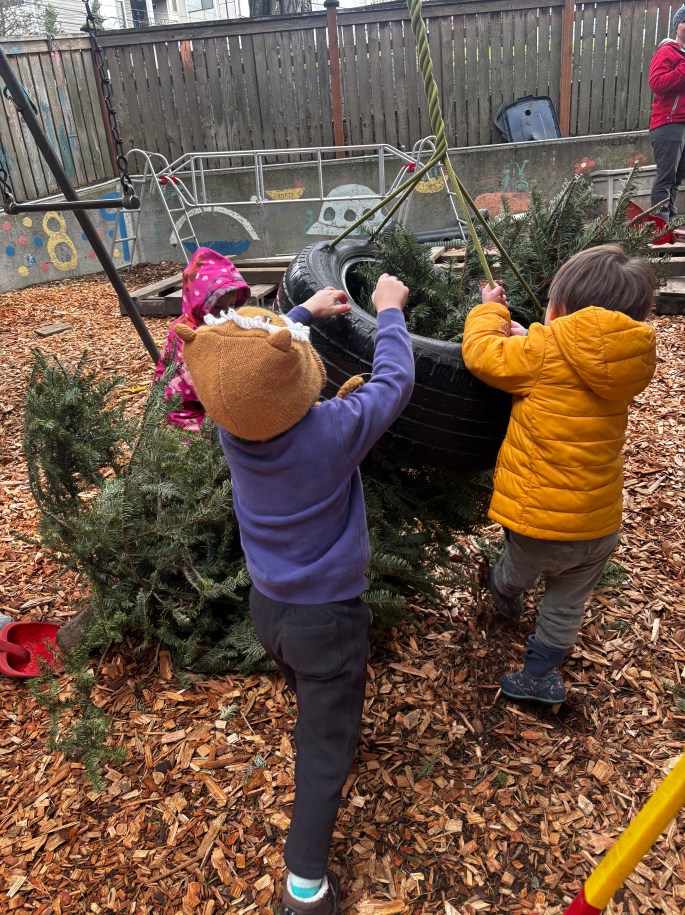
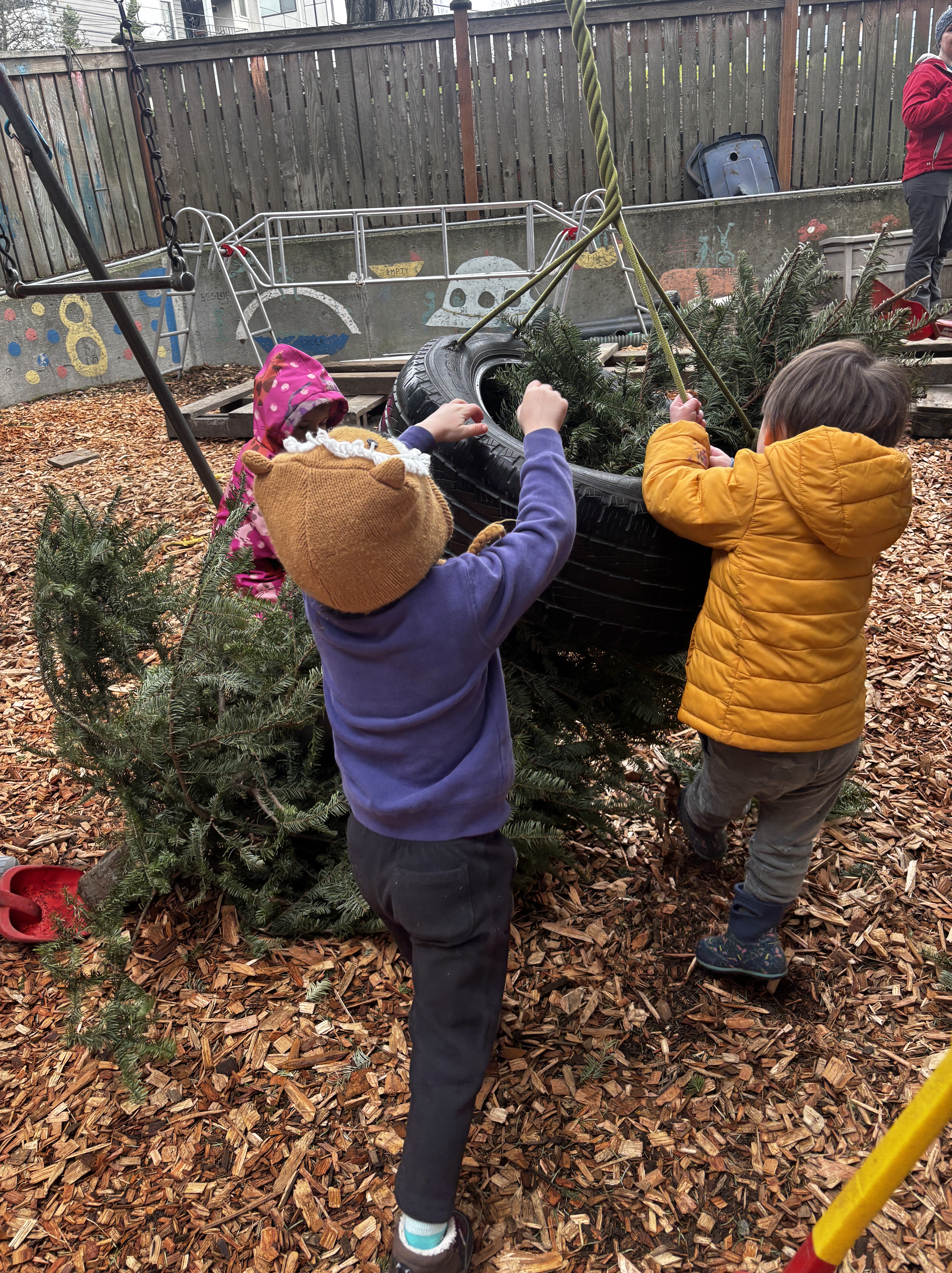
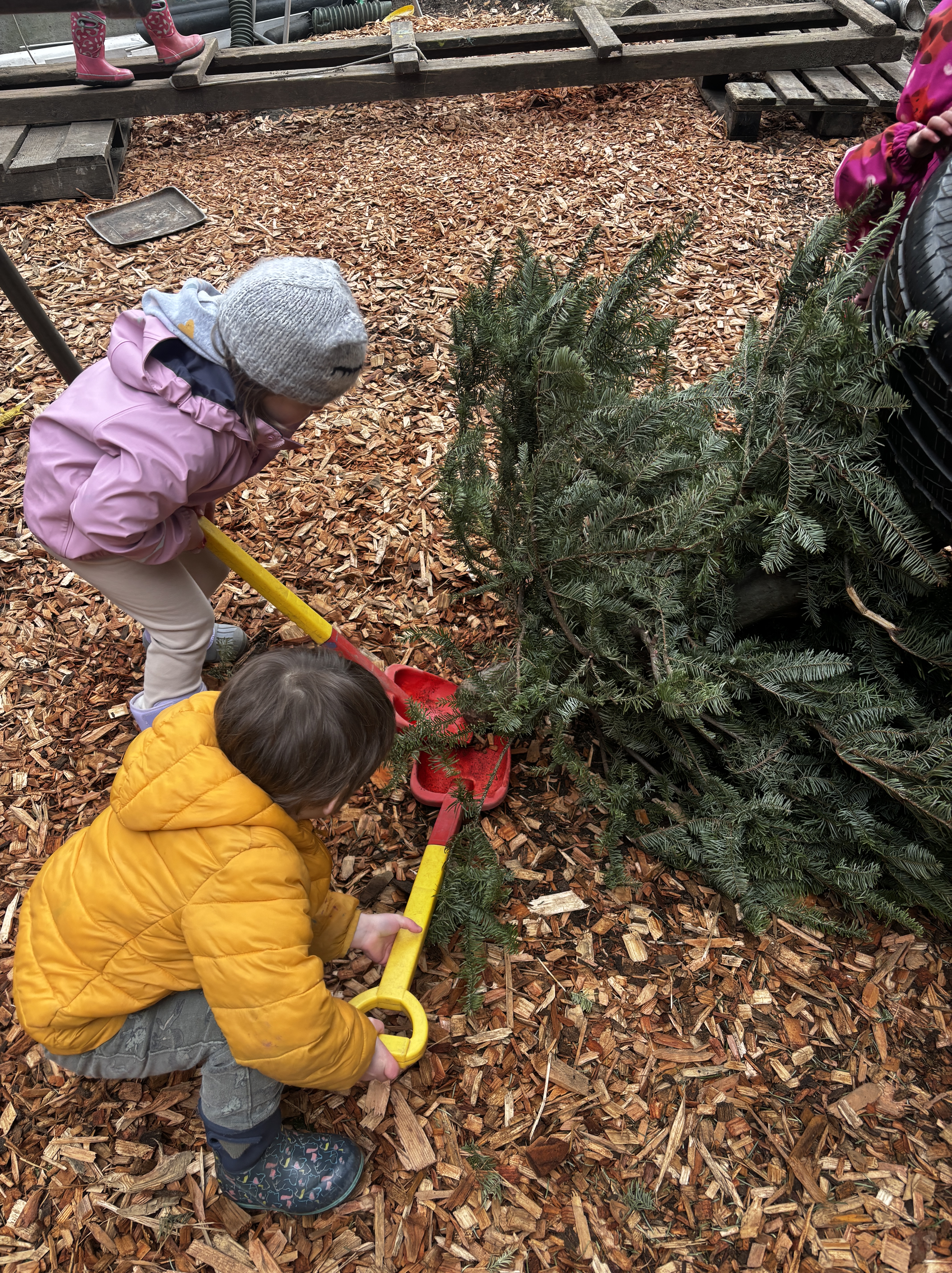
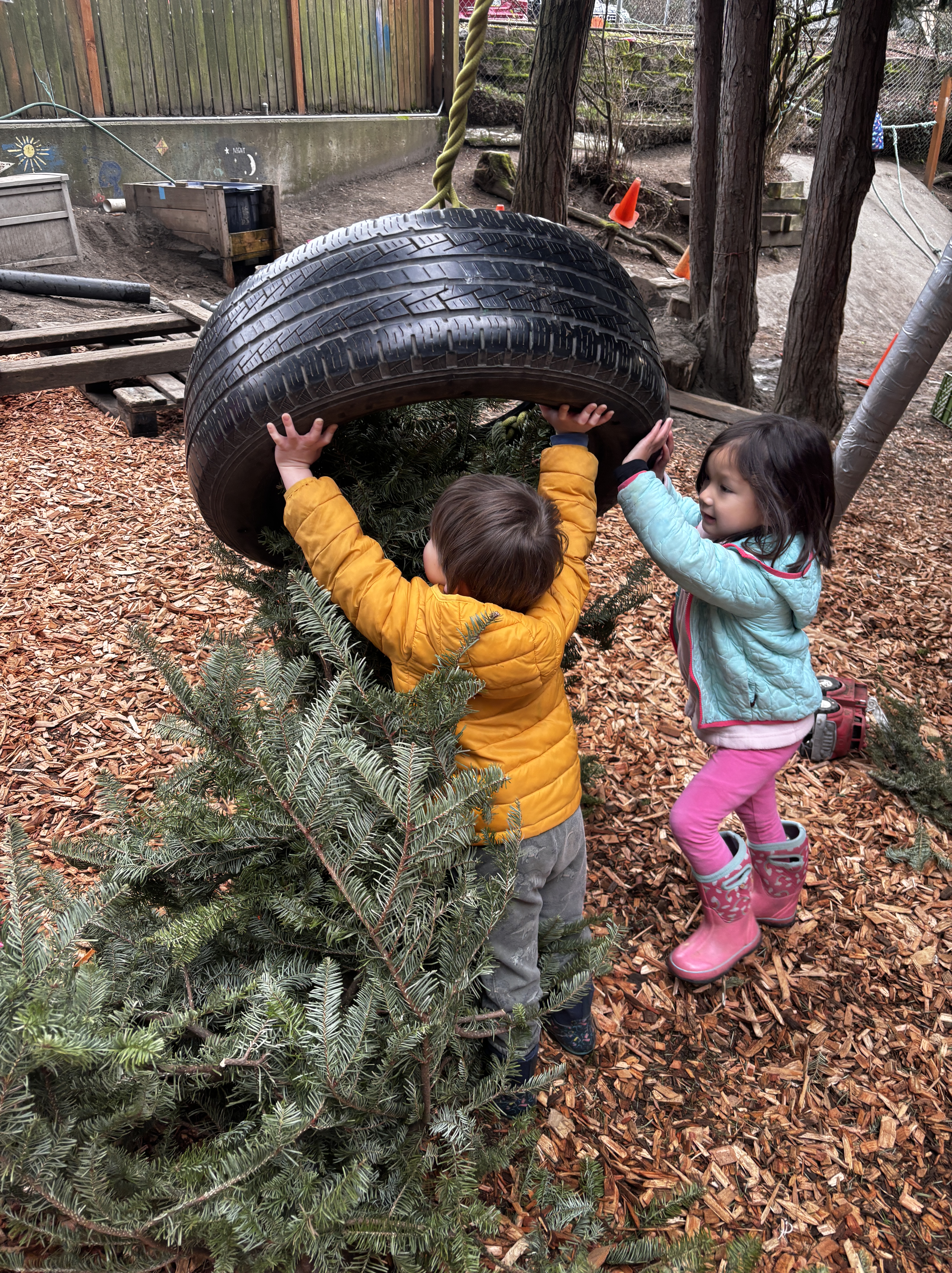
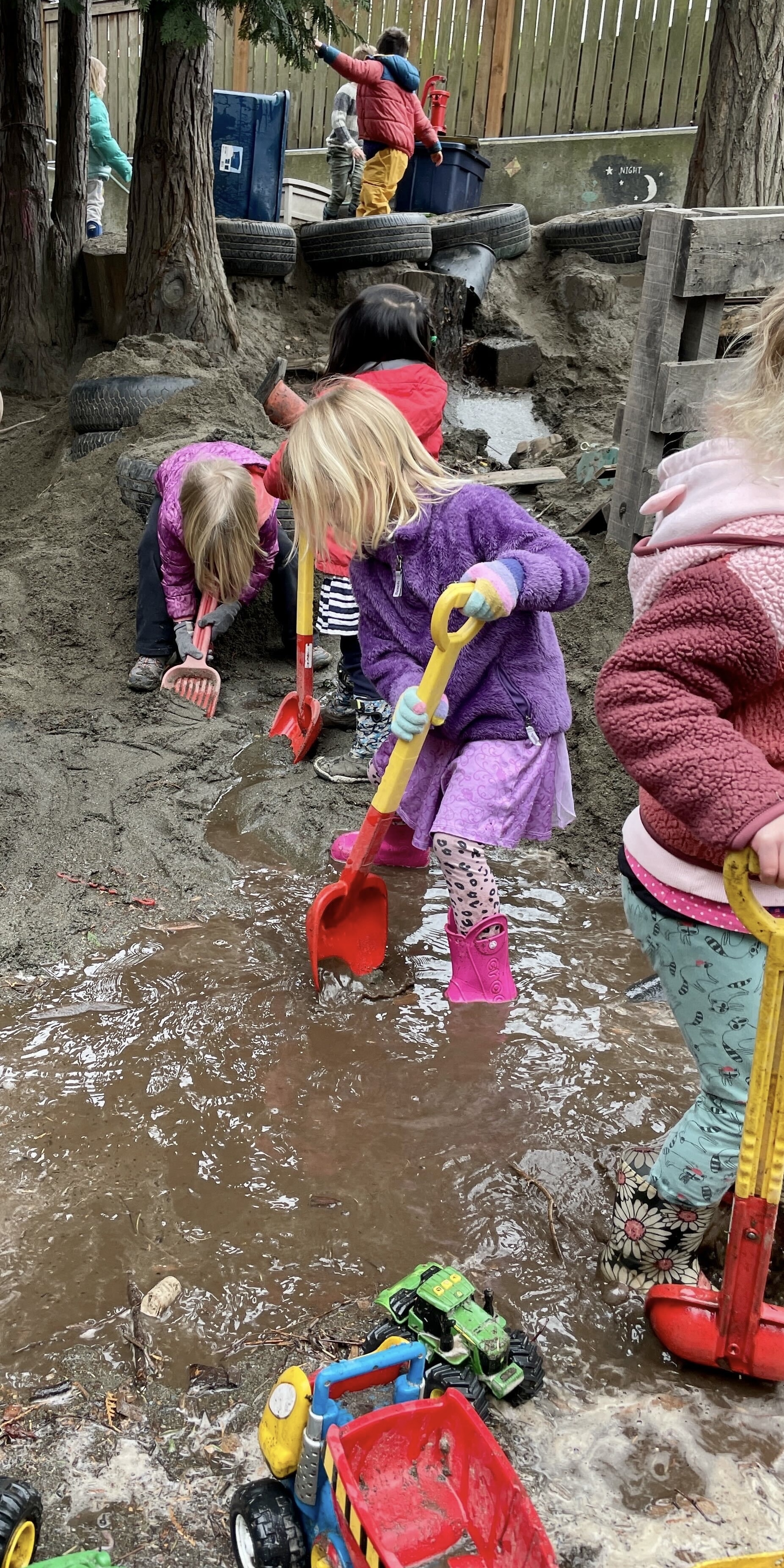
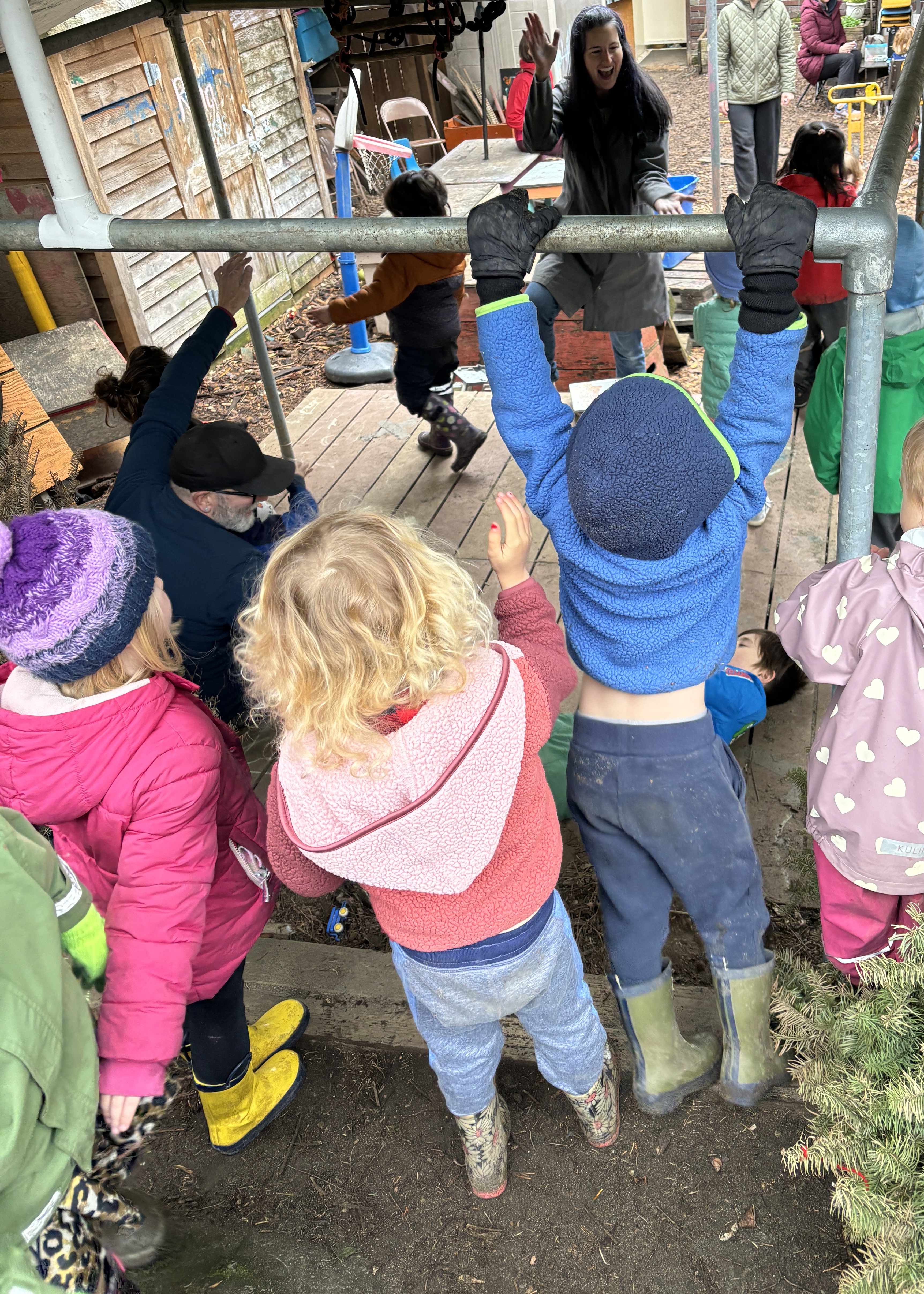
Well today presented quite the challenge. The tire swing, a favourite for many of our class, was tangled up with a conifer, courtesy of our kindergarten friends no doubt—and a puzzle for our preschoolers to solve.
First to arrive on the scene, two children. Seeing the problem they turn to me and ask: “Will you get the tree out?”
To which I reply, “What have you tried?”
“I tried hitting it.” “I’m stomping on it.” “I’m going to try stomping too.”
We all stomp and hit at the tree (shovels have now been introduced to aid the hitting).
An invitation: “I wonder if there are other things we could try?”
Up runs another child. “When you get the tree out can I swing on it? I want to swing on it because my friend loves to swing on it.”
This child finds a way to climb up the tree and sit high up in the tire swing watching the work below, holding their space in anticipation and encouraging their friend to climb up and join them.
More friends arrive, curious to check out the commotion and encouraged to lend a hand.
“Should we wait for the kindergartners to help?”
One child responds confidently, “These preschoolers have got it.”
We notice that the stump of the tree is dug into the wood chips. Time to add in some energetic shovelling and throwing of wood chips. Then we notice:
“You’re using the shovel like a lever—and I saw the tree move!”
Another child grabs a shovel and joins in.
The child perched in the swing tries jiggling the tire free by jumping on it.
One of the diggers is concerned that this might push the stump deeper.
It’s noted that more friends working together on the ground might mean the swing is available sooner, and the child jumps down to lend a hand while their friend surveys the scene.
Other friends come and go, but one child is determined to find a way. Using all their strength they try to lift the tire over the top of the tree. Another child diligently continues to dig and lever out the stump and is making progress.
A friend lends a hand pushing up the tire but notices that pulling from the bottom might also work.
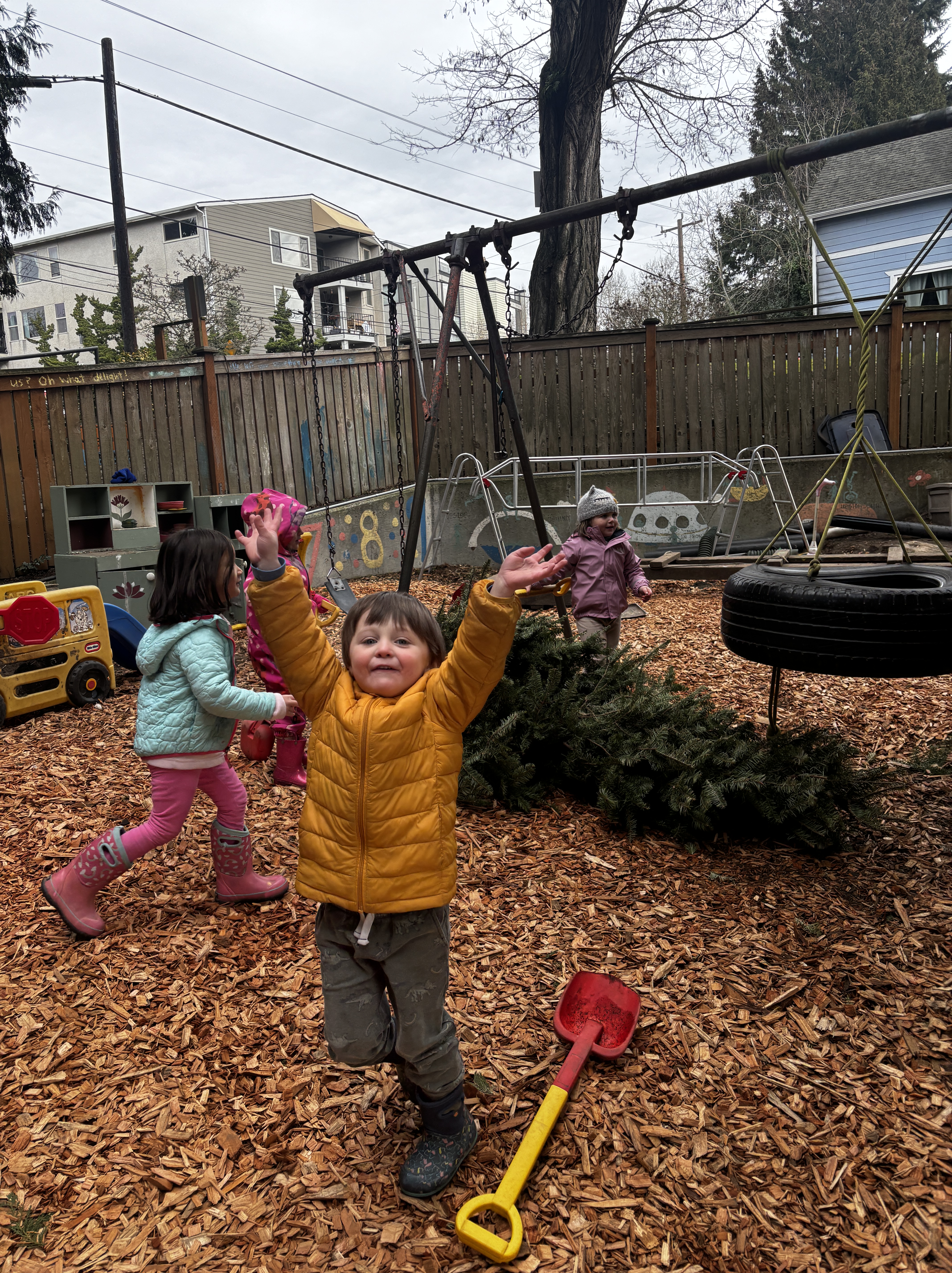
In the end, the digging, levering, pushing, and pulling all work together—and the tire swing is freed!
Celebrations ensue. What an achievement!
But back to the matter in hand—who gets to ride on it now that it’s free?
Teacher Althea – preschool and summer camp teacher – gets asked about our play dough recipe so often that we’ve decided to share this gem with you all!
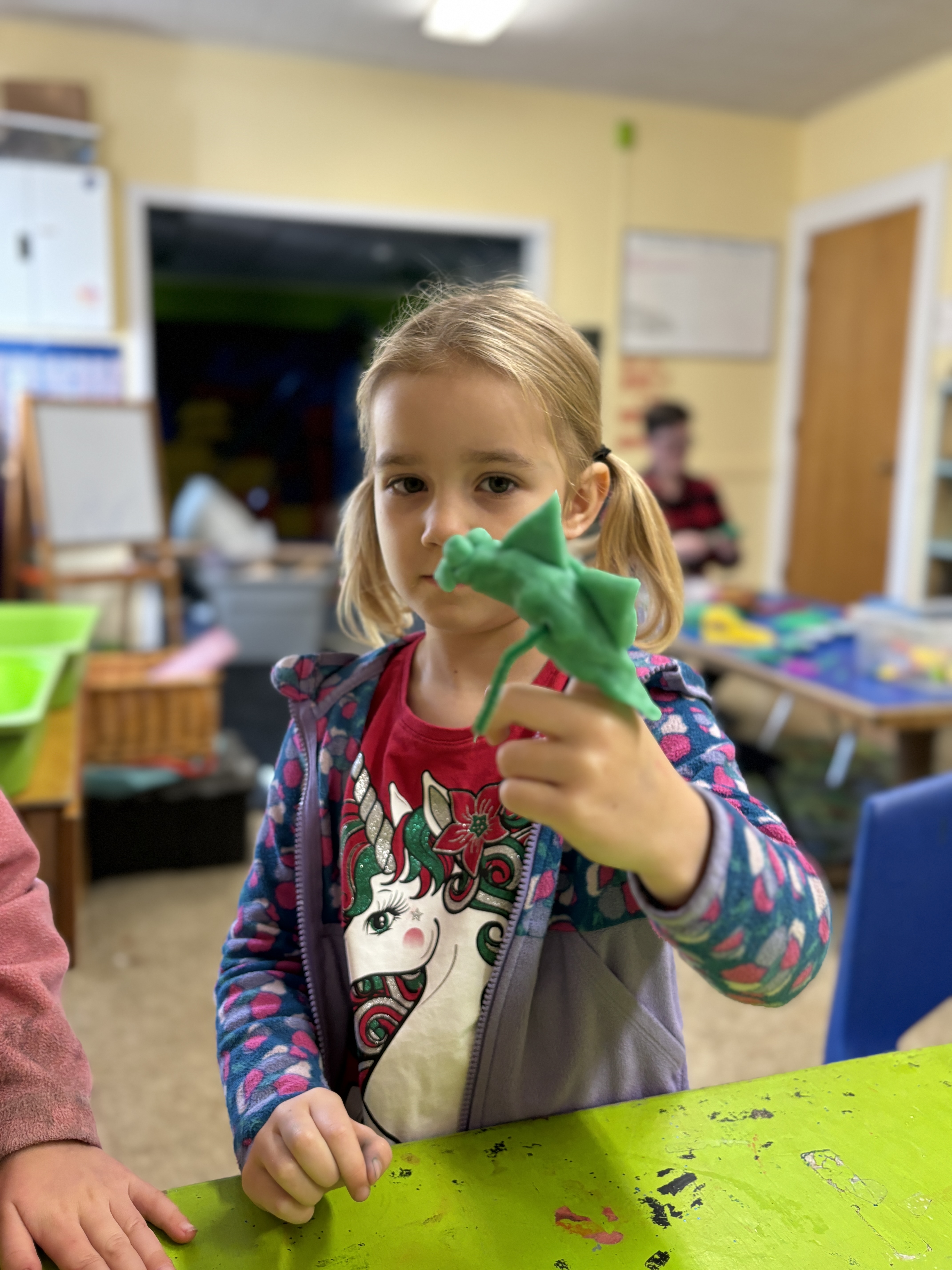
The kids love getting their hands on this stuff, it is super squishy, easy to roll and cut ‘cookies’ out of, and stamp with all manner of imprints.
Often, it gets used as pretend cupcakes, spaghetti and sausages in our play kitchen.
Children and toddlers can spend many minutes totally immersed in creating with the dough.
So how to make this superlative stuff?
Here is Teacher Althea’s guide:
I have to thank Teacher Tom for the recipe, and his mom for handing it down to him. The method is one part Tom’s suggestion to stop cooking while it’s sticky, and one part my need for deep sensory experiences combined with impatience! I like to make six- or eight-times this recipe for preschool use.
I think it gets to be a better consistency if you mix the wet ingredients in after the dry ingredients (saving the scent and color for after it’s off the heat). This started when my daughter wanted to help, and she likes to mix after each ingredient is added. I liked the result better than when I just dumped everything into the pot on the stove.
The key to silky, smooth playdoh is not overcooking it. I achieve that by mixing it with my hands on the stove and removing it when it starts to hurt, but you don’t have to go to such extreme lengths! Just remove it earlier than seems reasonable; it will continue to cook off the heat.
-Althea
Recipe:
1 cup flour
½ cup salt
2 teaspoons cream of tarter
1 cup water
1 Tablespoon cooking oil (I prefer olive oil)
food coloring (optional)
scent (optional, but recommended)
For preschool use, I make 6-8 times this batch
Method:
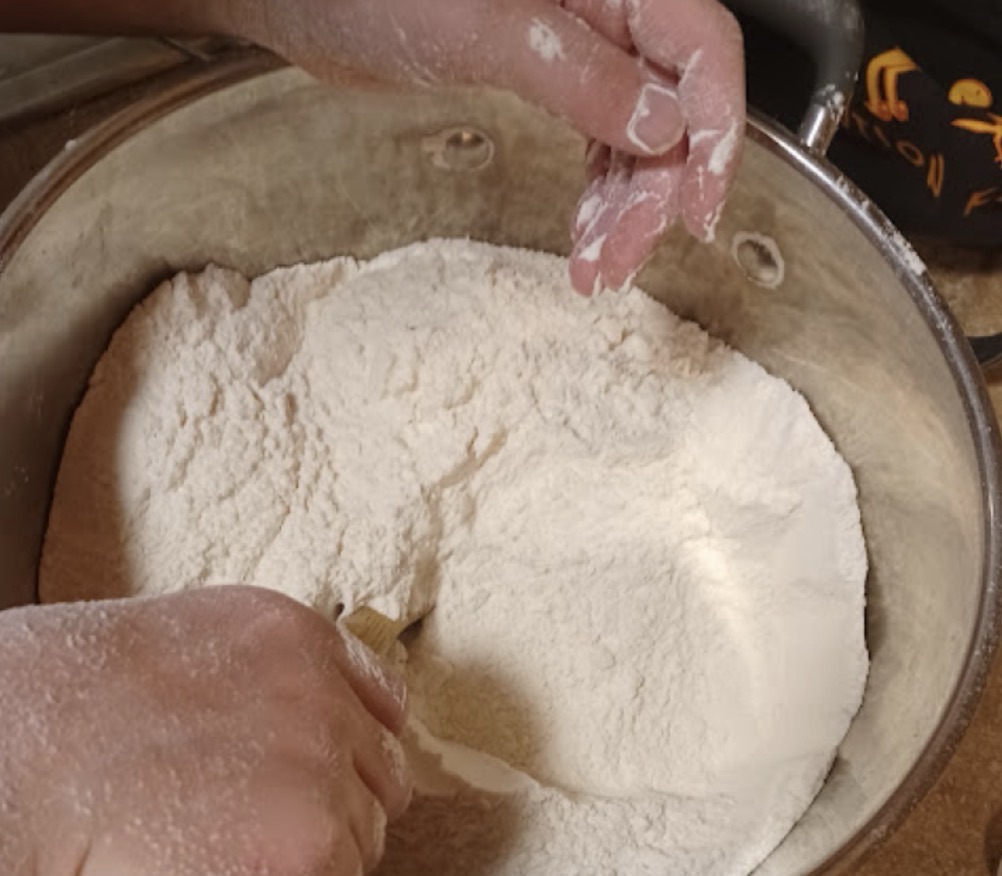
Mix together dry ingredients in a large pot:
Add in water and cooking oil and stir thoroughly:
Add to heat and stir continuously:
It will start getting lumpy, which is when you should start watching it for done-ness:
I use my hands, and when it gets too hot to touch I know it’s almost done:
When it’s done, it should look pretty well integrated but you should be questioning if it’s actually done. Remember it will continue to cook after it’s removed from heat. It won’t look like playdoh yet and should still be quite lumpy and sticky. It shouldn’t be shiny any more:
Remove it from the pot and lay it on a non-stick pan or parchment paper to cool:
It should still be sticky when pulled apart:
Add in a few drops of kid-safe scent (not very much) and quite a few drops of food coloring (if you use food coloring instead of water-color paint, you can compost playdoh at the end of its use):
Massage to integrate scent and color:
It will surprise you by starting to look like actual playdoh!
Let cool completely before putting it in a sealed container.
You can store it in a plastic bag for many months. It keeps longer in the fridge but should stay good for at least two months at room temperature if sealed.
As an adult, it’s easy to forget or overlook that “listen to this book” or “listen to your body” can so easily be received as “sit still and pay attention” or “eat your food”!
But somehow, “I’m going to read this book while your lunch is out” transforms the social, developmental, and physical demands of sharing a mealtime with peers and attending to a book into a powerful opportunity for regulating and world-building together.
So many educators feel like absolute geniuses when they discover for themselves the potent alchemy of reading stories to children while they are eating, and they should.
For myself, I feel protective of providing children with calm and connected opportunities to fuel their bodies while feeding their imaginations.
Eating is a challenge for so many of us—kids and adults alike—for so many reasons. Just to name a few that I observe over and over again with children and that I personally experience: neurodivergent hyperfocus that makes switching between tasks unpleasant/impossible, social anxiety, general squirliness.
I love communal eating rituals at school as an opportunity to model for kids my own difficulties switching what I’m doing, my commitment to taking care of my body, and my genuine pleasure reading to them and experiencing their reactions.
I feel particularly fortunate that this year’s group of kindergarteners are especially exuberant about their love of books and stories. I can’t wait to see what shared background knowledge, references, and touchstones we build together this year.
TeacherQuinn’srecommended reading
These are some books we’ve read together that both kids and adults have particularly enjoyed. All of them involve characters holding space for loved ones experiencing or processing a difficult time.
As someone trusted with the big feelings of children, I value these characters as models for how to listen and affirm without minimizing the role I often play in children’s big feelings.
The Blue House, by Phoebe Wahl
I haven’t confirmed, but I’m pretty sure Phoebe Wahl is on the short list of things that make my partner feel patriotic (see also Martina McBride’s “Independence Day” and Taco Bell). This book welcomes readers into the dense coziness and thick felt safety of the blue house Leo shares with his dad—just in time to learn alongside Leo that their home is going to be demolished, and that they will have to move. The text and pictures move everyone through how this parent guides his child through this change.
You Weren’t With Me, by Chandra Ghosh Ippen, illustrated by Erich Ippen Jr.
Early child educators are cautioned—with good reason—to be aware of important aspects of their classroom libraries. Specifically, it is important that all children experience the pleasure of seeing children who look like them in books and the affirmation that children like them deserve to be central characters in the stories that ground our learning communities.
This book, starring Little Rabbit and Big Rabbit, does no such diversity, equity, and inclusion work. It is, however, arguably one of the few books in which the animalness of the characters successfully holds space for the multiplicity of identities that might identify with the crux of the conflict in the book: there was an unspecified period of time, for unspecified reasons, when Big Rabbit was not with Little Rabbit, and even though they are together again, Little Rabbit is still processing that experience of withoutness.
Truly sensitive and unwaveringly insistent on emotional and somatic realities rather than feel-good solutions, this book offers many different adults wonderfully helpful scripts for holding space and staying present after an absence.
But wait, two more books with animals as main characters that I swear are worth it for the power of the social-emotional truths that they tell:
The Rabbit Listened, by Cori Doerrfeld
Taylor builds a truly astonishing tower when out of nowhere, UNIDENTIFIED AND DESTRUCTIVE BIRDS! Arguably even worse, Taylor is then inflicted with a whole menagerie of animals offering their trademarked solution to the disappointing situation (Snake: Let’s knock over someone else’s).
What a relief, then, when the Rabbit listens, and in doing so provides the space and co-regulation needed for Taylor to be able to move through the devastation.
Maybe Tomorrow? by Charlotte Agell, illustrated by Ana Ramírez González
Elba, a hippopotamus, drags a big black box behind her by a string everywhere she goes. Norris, an ambiguous reptilian creature that perhaps a herpetologist could identify, keeps showing up for her: inviting her on outings, asking her questions, and eventually grieving a friend with her.
I love that Elba and the book make it so clear that her grief will never not be a part of her, and I love that the big black box does in fact get smaller—not because it should, and not because it is more trivial or less profound than Elba realized, but because that is in fact what happens when others share in our mourning.
If you are interested in enrollment in our Kindergarten class, find out more here.
Teacher Quinn is our Kindergarten teacher. Quinn previously worked supporting students receiving special education services as a paraeducator. They have a Master’s in Education from the University of Washington with a focus on High-Incidence Disabilities. Quinn is also a licensed foster parent and a bio parent.
Watching our Woodland Park Coop kids learn social-emotional skills in front of our eyes gives us the warm fuzzies and gets us so excited.
Because this is why we do coop together – so they can grow into fully realized human beings, without learning to repress or suppress their feelings and needs.
As parenting coach Christel Estrada says: “Children can only regulate the feelings they are allowed to have.”
To show you what we mean, the following is a story of social-emotional learning in one day of Woodland Park Coop Kindergarten class, written by one of our parents:
I know that the primary goal for our Woodland Park Coop Kindergarten families is to give our kiddos an environment that fosters social-emotional growth, and I saw that all day long!
Dealing with disappointment
The kids used language I loved so much that I grabbed a pen and paper:
“Hold on. I just want to take a moment for this disappointed feeling.
“There are only two saws. Not everyone can start with one. That is disappointing.“
<deflated breath>
“Thanks.
“I know we can handle this. We’ll take turns and trade tools.“
<moves forward>
This pivoted the kiddos’ clamor and frustration to disappointment and acceptance and then moved us along calmly SO WELL. I saw examples like this all day that communicated this basic idea:
This matters. You matter. Your friends around us matter. I want to understand and connect on this. Let’s move forward together when you’re ready.
This is the connection to the world and their place in it that I want my kid to graduate from coop with.
Practicing boundaries and consent
I’m so glad that kiddos and adults are all getting so much boundary and consent practice each day.
Here are some examples of dialogue we’re using and teaching our kiddos:
I love playing with you all! Right now I’m not playing. This is my serious voice.
Are you both having fun right now?
How can I help when you feel sad? What doesn’t help you? Everyone’s different, and I want to know what works and doesn’t work for you!
Sure! I can be flexible right now! What’s your idea?
And also:
I’m so glad you tell me what you want. I can’t flex right now on this – I’ll keep looking for moments where I can flex.
Oh! I would love to have some hand art! Please don’t draw on my sleeve though – thank you
I also loved Teacher Quinn saying: “This item can stay in the room if you’re ready to use it safely; if you’re showing me that you’re not ready for it, I can take it home until we’re ready.”
Reminds me of the “when/then” parent education tool, so helpful, clear and kind – and lacking the power struggle.
The Pause
We also used “Pause! …. Thanks for pausing! I see that shovel is close to your friend’s head. Can you adjust your bodies before you keep swinging?”
Another form of words we’re exploring is: “You all are doing such a great job pausing when a friend is uncomfortable or hurt – that makes me comfortable playing wild games like this with you!”
A cheerfully yelled “Pause!” with some happiness about the group’s pause abilities can go a long way with physical play, we find.
All in all, I’m so grateful for this space and you people. I was a better, more intentional, more grateful and patient parent tonight because of my time with you all.
If you are interested in late enrollment in our Kindergarten class, there is 25% off if you enroll before 10/15/24, find out more here.
If you have a very attached toddler or young kiddo with intense separation anxiety, you know.
As beautiful as that profound attachment is – it can be a real challenge to balance your needs and the needs of your sweet koala kiddo.
Even though it seems totally the cultural and social norm to outsource childcare, these intensely-feeling children don’t always adapt easily to those situations from babyhood.
Drop-offs at daycare or preschool, or with caregivers they aren’t properly bonded with, can become hugely fraught for all involved.
This is where – for us and families in our situation – Woodland Park Co-op has been utterly amazing.
The whole community goes above and beyond to help children settle in and feel comfortable and secure.
Firstly, and most importantly, you are welcome to stay with your child in class until they are ready to be dropped off.
Secondly, you can explore a wealth of advice and wisdom about settling in children with separation anxiety.
We had several reassuring discussions with our parent educator about what was in the realm of developmentally appropriate in terms of separation from the primary caregiver.
Parent educator: [I paraphrase] “Yes, it’s normal that a two and a half to three year old wouldn’t want to be without the person they feel most safe and secure with, and you’ll see more independence built on the foundations of that dependence from about three.”
We had one chat with one of our preschool teachers about a plan to get our child used to my absences from class and having fun without me. From popping next door to read a book or have a call to going out for errands – until they were happy to go into the preschool classroom without even a backwards glance.
We had a call with our other preschool teacher strategising how to help our kiddo feel at home and secure at the co-op, and our suggestions were considered and incorporated.
Co-op teacher: “Sure, I’ll hang out with him when you’re dropping him off and make sure he’s okay.”
We had several conversations with other co-op members in their second year – or in one of their many co-op years – and received advice.
Co-op member: “Yeah, our kid had trouble with drop offs too at that age. We hung out with them at co-op and managed to drop off before the winter break and then they got really confident and in their stride in the Spring. It worked out great in the end!”
What we learned through this whole journey, is that some kids need more nurturing, more patience and more reassurance – and it’s okay to fulfill those needs.
It’s okay to adjust your expectations to meet your child where they are at, and we have been lucky and privileged to be able to have the resources to do so.
We’re just so grateful to have found a place and community that supported our child to become more independent and social with compassion and respect and acceptance for who he is. To drop him off at the gate with his ‘okay’ – and without deep distress and tears – has truly been a gift.
8.02am – Wake up and juggle sleepy kiddo snuggles, making snack for the day, having breakfast, toileting and oh, yeah, remember to change out of PJs and into grown-up clothes for the day.
8.17am – Somewhere in the middle of getting ready for the day, remember to check your Slack messages (the preschool day-to-day communications are on an application called Slack) and the schedule to check if you are working; or if you are an emergency substitute, if anybody needs cover for their work day. Any other urgent announcements or discussions will also be on Slack.
9.07am – Mentally run through if you have everything you need before: rainwear if it’s raining, warm layers if it’s chilly, the right footwear and hats, changes of clothes, the bag you so carefully packed for your kiddo.
And all these things for you if it’s your co-op work day too.
9.25am – Arrive at Woodland Park Co-op Preschool and dress your child in remaining needed layers/rub in suncream/put shoes on that were kicked off in the car.
9.30am (Unless it’s your work day, when you arrive a bit early to help set up) – Go into the mudroom with your kiddo, ensure they deposit their bag in their cubby, and wash their hands.
After that, if MWF preschool with Teacher Althea, go outside and settle your kid in for drop off. If Tu-Th with Teacher Cheryl, you start inside.
Note: If your child has separation anxiety the parent educator and teachers and other co-op members can work with you to make a plan working towards drop-off. Many kids go through ups and downs with this at preschool and it is well understood and accommodated.
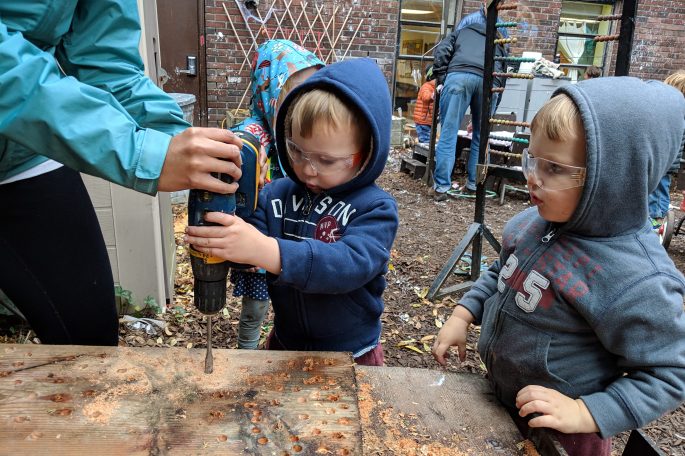
If you are working, find your assigned job for the day, whether it is at the art table, workshop bench, sensory play, blocks area or others.
Basically, you play with the children, remind them of safety considerations and help with conflicts.
In the middle of the class, for Teacher Althea, there is snack/lunch outside and then a transition to play indoors. Kids take their outside clothes off and wash hands.
For Teacher Cheryl’s class, there is story and song time first, and then getting suited up to have snack and then play outside.
12 midday – Teacher Cheryl’s class ends after ten minutes of story time and the classic “boom, boom see you later” song.
1pm – Teacher Althea’s class ends after clean up indoors and then ten minutes of story time. The day finishes with the “boom, boom” song, the signal that parents and caregivers have arrived to collect children.
You might be considering whether Woodland Park Co-op is the best fit for your child and what they might learn.
For us parents and caregivers, the community at the co-op is also truly a treasure trove of inspiring characters to learn from – especially if you are trying to learn how to raise your kids in a respectful, gentle and nurturing way.
So here is a slightly tongue-in-cheek account of some of the ‘types’ of caregivers you might encounter. In reality, we often embody most of these each and every work day:
The Empath
You are most likely to hear them saying: “I’m so sorry that happened”
Their vibe: Heart-centered
You can recognise them by: Whatever the problem, the children gravitate towards this person, knowing that they will come out of the interaction feeling seen, heard and understood.
The Alpha Mommy
You are most likely to hear them saying: “Tell me about it”
Their vibe: Quietly regal
You can recognise them by: Kids who don’t even know this person will come to them for hugs if they are upset.
The Fact Checker
You are most likely to hear them saying: “That’s developmentally appropriate at their age”
Their vibe: Reassuring
You can recognise them by: This person is most likely your parent educator or a member with experience of loads of toddlers/ young kiddos.
The Roughhouser
You are most likely to hear them saying: “Are you playing?”
Their vibe: Poised
You can recognise them by: They tend to be in the middle of games of chase or roughhousing – also ready to step in and make sure play stays safe.
The Mediator
You are most likely to hear them saying: “I’m noticing you both want to play with this toy, I’m going to hold onto it while we figure out a solution.”
Their vibe: Centered
You can recognise them by: This is a role we all play in the co-op.
The Creative One
You are most likely to hear them saying: “Yes, I see your magic wand! What are you going to turn me into?”
Their vibe: Playful
You can recognise them by: Ribbit, ribbit.
The Grounded one
You are most likely to hear them saying: “Yelling over here hurts our ears. If you want to let it out, go to the top of the hill”
Their vibe: Solid, stable, secure.
You can recognise them by: Literally nothing fazes them.
The Magician
You are most likely to hear them saying: “Saying that to our friends can hurt their feelings, but we can call each other silly names, what’s the silliest one you can come up with? Mine is rutabaga!”
Their vibe: Humourous
You can recognise them by: Turning pain into fun, with light-heartedness.
The Warm One
You are most likely to hear them saying: “Do you want a hug?”
Their vibe: Affectionate
You can recognise them by: They will have two or three kids in their laps at story time or in the reading nook.
The Safety-Conscious One
You are most likely to hear them saying: “Sure you can climb up there, if you can get down by yourself.”
Their vibe: Confident
You can recognise them by: They’ll be the one watching like a hawk
The Connector
You are most likely to hear them saying: “Can you find a friend to help push you on the swing/play that game/water the garden?”
Their vibe: Encouraging
You can recognise them by: They’ll be warm and welcoming to all the kids and caregivers.















 Teacher Quinn is our Kindergarten teacher. Quinn previously worked supporting students receiving special education services as a paraeducator. They have a Master’s in Education from the University of Washington with a focus on High-Incidence Disabilities. Quinn is also a licensed foster parent and a bio parent.






 Woodland Park Cooperative School